<?xml version="1.0" encoding="utf-8"?><feed xmlns="http://www.w3.org/2005/Atom" ><generator uri="https://jekyllrb.com/" version="3.10.0">Jekyll</generator><link href="http://matt-miller.org/feed.xml" rel="self" type="application/atom+xml" /><link href="http://matt-miller.org/" rel="alternate" type="text/html" /><updated>2026-04-10T17:45:28+00:00</updated><id>http://matt-miller.org/feed.xml</id><title type="html">Matt-Miller.org</title><subtitle>I&apos;m Matt Miller, an essayist, teacher, and gardener from the Midwest.</subtitle><entry><title type="html">On Lower Thinking</title><link href="http://matt-miller.org/lower-thinking/" rel="alternate" type="text/html" title="On Lower Thinking" /><published>2026-02-05T00:00:00+00:00</published><updated>2026-02-05T00:00:00+00:00</updated><id>http://matt-miller.org/lower-thinking</id><content type="html" xml:base="http://matt-miller.org/lower-thinking/"><![CDATA[<p><em>Crossposted from <a href="https://buttondown.com/matthewjmiller">my newsletter</a>.</em></p>

<p>As one of my sabbatical projects, I’m building a chicken coop. We have long flirted with the idea of getting chickens, but one thing or another stopped us: too many little kids, a lack of space to keep them, or the startup costs. But recently my father-in-law scavenged a bunch of lumber from a building site, and suddenly one of my reasons to hold off was gone.</p>

<p>I do a lot of DIY projects. I have built a few pieces of outdoor furniture; I can do small plumbing and electrical jobs; I have spent hours upon hours refinishing and repairing decks; and I re-roofed our house this past summer. When my father-in-law offered me the lumber, I didn’t question whether I would be able to build my own chicken coop—I just started planning the project.</p>

<p>Truth is, though, I am not an especially skilled DIYer. I lack the patience and precision required to master complex tasks requiring a high degree of polish. Fine furniture and major construction are beyond me without the help of someone more skilled to correct my mistakes. I have already accepted that my chicken coop will look like someone’s shack in the woods, and not just because of the reclaimed materials.</p>

<p>My weakness in DIY tasks isn’t really one of knowledge or ability but of patience and attention. My attention flags as I have to sand a board for the third or fourth time to get it really smooth, or I get in a hurry as I snatch fifteen minutes to work on a project before dinner. It’s the same failing I demonstrate in other areas of life, intellectual or relational. I am a hasty person. I would be a better person in all respects if I would more frequently slow down and pay attention to the task in front of me without rushing on to the next thing.</p>

<p>I have been thinking about my limitations as a builder since, at the prompting of my friend <a href="https://matthewleeanderson.substack.com/">Matthew Lee Anderson</a>, I read a discussion of so-called <a href="https://blog.cosmos-institute.org/p/on-the-noble-uses-of-ai?utm_campaign=post&amp;utm_medium=email&amp;triedRedirect=true&amp;utm_source=substack">“noble uses of AI” by the philosopher Kevin Vallier</a>. It’s one of the more nuanced and reflective “pro-AI” essays I have read, and so since I have spent <a href="https://buttondown.com/matthewjmiller/archive/why-i-am-not-going-to-use-ai/">a lot of words</a> <a href="https://www.frontporchrepublic.com/2023/05/composition-as-the-art-of-loading-brush/">publicly burying</a> <a href="https://mereorthodoxy.com/empty-words-against-artificial-language">large language models</a>, I wanted to think through the line of argument.</p>

<p>Vallier’s analysis turns especially on a distinction between kinds of intellectual tasks. He asserts that AI</p>

<blockquote>
  <p>can handle lower-order cognitive tasks, freeing us for activities that engage our highest capacities. A researcher who once spent hours hunting for sources can now spend those hours thinking about what the sources mean. A writer who labored over formatting can focus on whether the argument is true.</p>

  <p>Of course, people may not do this. We all know that AI can seduce us into passivity. But I would argue that it also elevates the opportunities for virtue. The mind freed from drudgery really can rise. It can shift us from the mechanical to the meaningful.</p>
</blockquote>

<p>Vallier’s strength is that he acknowledges that “cognitive offloading” like that offered by AI tools does indeed cause intellectual skills to atrophy. However, he argues that we make such tradeoffs in other realms and that such offloading, advisedly done, may be worthwhile. He offers the example of a patient who uses AI to find medical research to inform her conversations with her doctor:</p>

<blockquote>
  <p>She did not hunt for the research herself (there’s no free cognitive lunch), but she did something harder: evaluate it. Her speed at reading dense medical literature may atrophy. But her ability to weigh trade-offs, to question authority, and to integrate information grows stronger.</p>
</blockquote>

<p>I’m not convinced, however, that the distinction Vallier wants to make here can be sustained. It would be lovely to think that there’s some kind of “higher” “deliberative capacity” that involves elevated thought and no drudgery, in the same way that it would be nice to think that if I had the right tools, I could practice pure craftsmanship without the “drudgery” of sanding and staining and making precise cuts. But in fact the real craftsmanship <em>is</em> the drudgery, and the real thinking <em>is</em> the attention to detail that’s required to wade through complex texts and think carefully and precisely about grammar and formatting. The great thinkers, like the great craftsmen, are not those who rise above drudgery but those who embrace it and therefore transform it.</p>

<p>In what sense can we say that Vallier’s hypothetical medical patient evaluated her medical research because she read AI-generated summaries of it? Did her “ability to weigh trade-offs, to question authority, and to integrate information” improve because she skipped the step of reading the research materials herself? Granted, she may have reviewed more information, faster than had she read the original studies. Maybe she didn’t have time or expertise to read those studies—fair enough. But I find it hard to believe that Vallier seriously believes she’s thinking on a “higher” level than person who has actually read the research herself.</p>

<p>Vallier advocates that we should offload “mechanical cognition: the tedious, repetitive operations that don’t require judgment.” But human beings, because we are not machines, do not perform cognitive tasks mechanically. Even while conducting seeming drudgery, we are learning and exercising complex acts of judgment. Consider transcription, a task well on its way to full-blown automation. My wife had occasion to transcribe a talk for her personal use recently. She reports to me that through the so-called drudgery of transcribing, she listened to the material in a different way and learned it more intimately; moreover, she exercised judgment throughout the seemingly mechanical act of transcription, sometimes correcting the speakers’ expressions to make them comprehensible in text. If transcription isn’t a purely “mechanical” cognitive task, then, it’s unclear to me that any such thing exists at all. (Consider also <a href="https://www.ian-leslie.com/p/all-hail-the-putter-togetherers">Ian Leslie’s post about putting together scissors</a>.)</p>

<p>Good thinking, it turns out, isn’t a matter of getting “higher,” to some realm where we are spared, like gods, the need to attend carefully to humble, repetitive tasks. Rather, good thinking is a matter of getting lower, following the nuances of an argument or sifting through page after page of tedious research. The most skilled thinkers aren’t those who dispense with the need for this drudgery, but those who have the strength to go on attending to the tedious aspects of thinking.</p>

<p>I want to note also that Vallier’s essay was published by an organization advertising itself as “the academy for philosopher-builders,” with “builders” defined, of course, as technologists and builders of businesses. I confess I suspect that those whose definition of “building” doesn’t involve the use of the hands may not know a lot about what’s involved in so-called “mechanical” tasks.</p>

<p>Not long ago, I asked a friend who’s an expert builder for advice on how to level a bathroom door that had stopped latching. He described a process of tiny adjustments: drive a long screw in the top, check the level, shim up the bottom hinge a little, check again, scrape away at the trim a bit, check again. I was just thinking how tiresome that all sounded when he said: “It’s kind of fun to do that kind of little tinkering job.” For all my advanced degrees, at that moment I felt I was the one who possesses the lesser intelligence.</p>]]></content><author><name></name></author><category term="AI" /><summary type="html"><![CDATA[Crossposted from my newsletter.]]></summary></entry><entry><title type="html">Trying to Praise the Mutilated World</title><link href="http://matt-miller.org/mutilated-world/" rel="alternate" type="text/html" title="Trying to Praise the Mutilated World" /><published>2026-01-22T00:00:00+00:00</published><updated>2026-01-22T00:00:00+00:00</updated><id>http://matt-miller.org/praise-mutilated-world</id><content type="html" xml:base="http://matt-miller.org/mutilated-world/"><![CDATA[<p><em>Crossposted from <a href="https://buttondown.com/matthewjmiller">my newsletter</a>.</em></p>

<p>Dear readers,</p>

<p>On the occasion of my relaunching my newsletter writing on a new, less algorithmic platform, perhaps it’s worth a note to say what I’m doing here.</p>

<p>I am a writer in love with the world of letters, and with the world. A few years ago, I proclaimed myself, half-unseriously, the director of <a href="https://buttondown.com/matthewjmiller/archive/new-initiatives-at-the-center-for/">a new Center for Needless Splendor</a>, an imaginary institution dedicated to “acts of frivolity, heedlessness, pleasure, beauty, conviviality, and feckless joy of all kinds.” The Center does not exist anywhere except in my own mind, but it has a purchase over me that none of the real, practical institutions of my daily life can or will have. The things I love most in this world are impractical, small, slow, quiet, analog, beautiful. And they are not reducible to “the arts” or “the sciences,” but partake profligately of a variety of disciplines. I love to read poetry and I love to split firewood with an axe. I love to prune berry bushes and I love to listen to Corelli. I have described my writing here as concerned with “literature, place, and oikonomia” (or household management), but this is really a very selective choice of the things that fascinate me.</p>

<p>At the same time, as a lifelong resident of the great agricultural-industrial belly of Middle America, I am acutely aware that the things I love are threatened, compromised, and desecrated by our cultural and economic order. Stealing a line from the poet <a href="https://www.poetryfoundation.org/poems/57095/try-to-praise-the-mutilated-world-56d23a3f28187">Adam Zagajewski</a>, I have never been able to forget that I am praising “the mutilated world.” My work as a writer is always to hold together beauty and desecration: poetry and landscape, critique and analysis. That project manifested initially in <a href="https://bellepointpress.com/products/leaves-of-healing">my first book of essays</a>, a work concerned with the beauties of the earth and the liturgy equally with the ravages of time.</p>

<p>My next extended project is a book about Nebraska, my home state. Praising the mutilated world is an apt phrase for this work, for Nebraska is very beautiful and very mutilated. As a person in exile from that place and yet still utterly wrapped up with it, my feelings on the subject are complex. I hope then that what will come of this work is some writing that will help reader grapple with the complexities of their own sense of exile or belonging, and with the complicated places they call home.</p>

<p>A first dispatch from this project <a href="https://www.frontporchrepublic.com/2025/02/writing-exile-and-reading-homeward/">appeared in <em>FPR</em> early last year</a>:</p>

<blockquote>
  <p>Though I can and do go home again, Nebraska as a daily presence is lost to me. To hold that lost place “bright in memory,” though, means to adopt a posture of gratitude rather than rage. Like Jim Burden, it is to be thankful for “the precious, the incommunicable past.” Dwelling in my home state may be a thing of the past, and yet that past can still be a gift to me, helping me come “home to myself.” And such a posture of gratitude means too that I can be grateful for the saplings and the weeds—for my present life in Missouri, that has sprung up in the place of the home I cherish in memory. I am no longer a child, and so I can’t proclaim myself “entirely happy” like the young Jim Burden. But I can be grateful that I get to have love in my heart, even love known only in loss. I pay the price for my love of two places in homesickness and longing, and yet I’m bound to admit as well that I’m a recipient of a great bargain.</p>
</blockquote>

<p>Proceeding from my investigation of “writing exile and reading homeward,” the book will uncover the different elements of my home state in literature, landscape, and culture, drawing upon my memories as well as reading and travel.</p>

<p>I expect to complete the manuscript by the end of the summer; I have the privilege of a sabbatical from my teaching job this spring in order to work on it. I have been thinking about this material for—well, all my life, but acutely for more than five years. Another essay that will form a portion of the book, about <a href="https://www.cerealcityreview.com/issue-1-fiction-miller">my relationship to my hometown river and the 2019 Nebraska flooding</a>, was originally published in 2020. I would have written this book before now, probably, except that it is deeply introspective work for me, and so the routine chaos of work and family life often made it difficult to make progress. Now, with some clear space mentally as well as practically, the work is exploding out of me, hundreds and thousands of words a day. I’m excited for you to see it.</p>

<p>I’ll be saving most of that new work for venues other than this newsletter, but I would like you to see a little of it. So here’s some new material, previously unpublished, I have added to the essay on exile, linked above. Consider it a preface to the new work:</p>

<blockquote>
  <p>The poet Donald Hall, himself a poet of long tenure in one place, has movingly documented the universal quality of exile in his poem “Exile,” which takes the transition from childhood to adulthood as a primordial loss, an essential exile. Hall laments: “We move and move but only love the lost / Perversity our master to the bone.” My loss of my blue dinosaur would be familiar to Hall as he notes we cast aside our toys in growing to adulthood, making ourselves “both child and murderer,” leaving each of us east of Eden, “solitary as the dead.” For Hall, such exile comes because of our pride: we all want “to king it in that perfect land / We make and understand.” But such pride is inescapable, a sin that marks us all, without exception. The challenge then is not so much to free ourselves from the exile that marks each of our lives, but to come home again, to “reach and touch” that person or those places that bring us back to ourselves. Like Odysseus, each one of us will lose the primordial innocence of our childhood innocence. We must seek for the loved one who can help bring us back home, for the Penelope who can make our homecoming real in imagination if not in experience.</p>

  <p>This book represents my fullest attempt to make my homecoming of the imagination real. I have struggled to articulate even to myself what this book is—at various times I have conceived it as a travelogue, a literary history, and a memoir. I have considered whether it might best be transmuted into fiction or poetry. This formal uncertainty, combined with the passion I have for the subject and my geographic distance from it, has meant that the book has been slow in the writing. Perhaps readers will find it slow in the reading, too, as a project this self-motivated has every risk of being. I find it intriguing that other place-oriented works of nonfiction from the northern Plains how showed similar marks of generic confusion. Kathleen Norris termed her homecoming book <em>Dakota</em> a “spiritual geography,” while Wallace Stegner’s book about his boyhood on the Saskatchewan frontier, <em>Wolf Willow,</em> carries the tripartite subtitle <em>A History, a Story, and a Memory of the Last Plains Frontier.</em> Something about this landscape invites such personal grappling, it would appear, yet resists the application of simple categories.</p>

  <p>Beyond my homecoming of the imagination, I do have a further purpose that rests close to the heart of this book, and one which speaks more than just my displacement. Nebraska is an overlooked place, a place always passing away, a place eroded by powerful forces, a place consumed by exploitation, a place desecrated by greed, a place marked by suffering. It is the distillation of what many term fly-over country, a place known more for how long it takes to get out of than by anything it has to offer. And yet I love it, and I always have.</p>

  <p>There are many such places in this world of ours, transient, eroded, consumed, desecrated, marked. Many places that we pass over or flee from. And all these places deserve to be loved by someone, because they are real, because they exist for the sake of love.</p>

  <p>Here is what I have to say: Nebraska is very beautiful, not just from the perspective of a homesick nine-year-old or a middle-aged reader of Wendell Berry. It is beautiful in fact, because it is a place known and loved, though without enough of either virtue. I expect and hope that some will read this book thinking of their own beloved places, and that is well, because homecoming is a universal human longing. However, I am less concerned with universals than with particulars. This means that I am less interested in persuading my readers to reflect upon homecoming in particular than to know and love Nebraska in specific. It is a place that deserves more attention than to be driven or flown over thoughtlessly. It is a place with a beauty that reveals itself only to those who look carefully and over time. It is a small place, ripening to something new-born. It is place always passing and irrecoverable, known only in loss. It is the world. Like all the rest of the world, it reveals itself only to those who love it and give it their attention.</p>
</blockquote>

<p>More coming soon: on Nebraska, and on other matters. I have it in mind to write some pieces on some of the books I teach most frequently: <em>Brave New World,</em> <em>Hamlet,</em> <em>The Odyssey.</em> I have some notes on Wendell Berry I want to share. And a few more rants on digital technology of various kinds. Let me know if there’s any of that you find especially interesting. With the sabbatical, I expect to write here regularly for a few months.</p>

<p>These emails no longer have comments or other social features, thank goodness. But I would be glad to hear from you. Hit reply and send me an email.</p>

<p>Peace,</p>

<p>Matt</p>]]></content><author><name></name></author><category term="writing" /><summary type="html"><![CDATA[Crossposted from my newsletter.]]></summary></entry><entry><title type="html">People who want to be machines</title><link href="http://matt-miller.org/machines-berry/" rel="alternate" type="text/html" title="People who want to be machines" /><published>2025-04-09T00:00:00+00:00</published><updated>2025-04-09T00:00:00+00:00</updated><id>http://matt-miller.org/berry-machines</id><content type="html" xml:base="http://matt-miller.org/machines-berry/"><![CDATA[<p>Two quotes from Wendell Berry:</p>

<blockquote>
  <p>The next great division of the world will be between people who wish to live as creatures and people who wish to live as machines.</p>
</blockquote>

<p>From <em>Life is a Miracle</em> (published 2000).</p>

<blockquote>
  <p>I know that there are some people, perhaps many, to whom you cannot appeal on behalf of the body. To them, disembodiment is a goal, and they long for the realm of pure mind—or pure machine; the difference is negligible. Their departure from their bodies, obviously, is much to be desired, but the rest of us had better be warned: they are going to cause a lot of dangerous commotion on their way out.</p>
</blockquote>

<p>From “Feminism, the Body, and the Machine” (published 1990).</p>

<p>I used to think these comments from Wendell Berry were hyperbolic. In 2025, I think so no longer.</p>]]></content><author><name></name></author><category term="berry" /><summary type="html"><![CDATA[Two quotes from Wendell Berry:]]></summary></entry><entry><title type="html">Not prestige, but community: my advice on grad school</title><link href="http://matt-miller.org/grad-school-advice/" rel="alternate" type="text/html" title="Not prestige, but community: my advice on grad school" /><published>2024-01-04T00:00:00+00:00</published><updated>2024-01-04T00:00:00+00:00</updated><id>http://matt-miller.org/grad-school</id><content type="html" xml:base="http://matt-miller.org/grad-school-advice/"><![CDATA[<p>There’s no shortage of such advice out there; <a href="https://www.bradeast.org/blog/phd-in-theology">consider this winsome and thoughtful post by Brad East</a>, which puts the whole question in a properly theological key which I won’t try to better. However, the practical side of Brad’s post and some recent conversations with students have underlined for me that I offer different advice than most of my fellow professors do. I’m writing that advice out here in hopes that it will be of service to some, perhaps especially to those students who share with me a concern for values like place, community, and family—values to which graduate school has too often been hostile.</p>

<p>For a long time—decades at this point—the job market for those seeking to enter the humanities professoriate has been highly competitive. And probably for about equally long, professors have been giving students something like this advice:</p>

<blockquote>
  <p>Prestige is the currency of academia, and so in order to get a job, you should try to maximize the prestige of your CV by attending the highest-ranking program possible and publishing as much as possible in the highest-ranking journals that you can.</p>
</blockquote>

<p>Probably this was good enough advice at one time, so far as it goes. “So far as it goes” meaning insofar as you wanted to let a career drive all your decisions to the exclusion of considerations like place, community, and family—so, for me, not all that far, as it turns out. But good career advice, at least.</p>

<p>Today, I’m not convinced that such advice is even good <em>career</em> advice, all other values excluded. I say this because higher education in America is in a period of great contraction. Virtually all academic institutions, and the humanities departments within those institutions, are declining in size both for cultural and demographic reasons, and that trend will not reverse anytime soon. COVID accelerated this trend by dealing a major blow to the financial stability of many institutions and by dramatically reducing the birth rate in this country, ensuring that future educators will have fewer students to instruct.</p>

<p>When I started graduate school in 2010, the job market for humanities graduate students was bad; today, it’s much, much worse. Rhetoric and composition, my PhD specialty, is probably the healthiest subfield in the humanities—most institutions still agree that students should learn how to write—and this year (2024) there are <a href="http://rhetmap.org/market-comparison/">fewer than half the jobs listed as there were a decade ago</a>.</p>

<p>Given these realities, hoping in prestige is placing your trust in a false god. If there are less than 200 jobs nationally in your subfield each year, there aren’t enough positions even to employ all the graduates of the most elite programs, which have reduced the number of students they admit, but not enough to change the supply-and-demand imbalance. Getting a job as a professor is like making the NBA, as Tim Carmody wrote many years ago—there are a vanishingly small number of spots for a huge number of competitors, and predicting who will make it is a crapshoot. And yet it’s not like the NBA in that if you do in fact make it, the compensation isn’t generational wealth, but an income that might—depending on cost of living and your family situation—just barely allow you middle-class status, with fewer worker protections and worse benefits than those held by the local high school teachers.</p>

<p>At this point, I can’t imagine how it could make sense to uproot your life, to take out debt, or to make other major sacrifices chasing academic prestige. To spend a decade of your life living in a strange place, working desperately for little money, in pursuit of a credential that amounts to a lottery ticket that will buy you a slim chance at a modest salary—that’s a fool’s errand.</p>

<p>As grim as this situation sounds, I think it actually offers an opportunity to reframe the academic life—to make it less of a careerist pursuit and more of a way of living in service of your community and your flourishing as a whole person. As bad as the job situation sounds, and is, I don’t think it actually implies that nobody should go to grad school. Rather, it’s an invitation to stop being hag-ridden by prestige and conformity, and to start making your graduate education something that serves rather than detracts from your larger well-being.</p>

<p>The old advice assumes that prestige and conformity rule the day in academia. But the hold of those powers is slackening as higher education in this country declines—if there’s no academic job waiting for you on the other end, there’s no reason to let prestige drive your decisions. Maximizing prestige isn’t likely to get you anywhere, because jobs for professors—and especially those jobs that really care about prestige—are vanishing. Therefore, instead of chasing prestige in order to qualify for jobs that aren’t there, you should pursue social capital and find ways to make yourself useful to your community. These qualities will help prepare you for jobs that might actually be there when you graduate, but more, they will help you make a life that’s about more than a career.</p>

<p>So, to sum up, my bullet-point advice to would-be graduate students in the humanities runs like this:</p>

<ol>
  <li>Go to graduate school because you want to be that sort of person, rather than in expectation of a certain career.</li>
  <li>Don’t chase academic prestige, but focus on building relationships with your community through your academic pursuits.</li>
  <li>Do not—I repeat, DO NOT—take out debt for graduate school, but only go if you are fully funded.</li>
  <li>Remain flexible and maintain a Plan B career plan, since you can’t bank on an academic job.</li>
  <li>Seek out ways to make your studies useful to your community.</li>
  <li>Don’t put other parts of your life, like marriage and family, on hold.</li>
</ol>

<p>Now, a few elaborations.</p>

<ol>
  <li>
    <p>In the end, all education is formation, and so the only good reason to go to graduate school (or to pursue any education at all) is that you want to be the sort of person who has pursued such education, regardless of the outcome. Under the old dispensation, however, the professionalization component of graduate school had a tendency to form you in the image of the careerist striver—which, for me, is actually the opposite of everything that study in the humanities ought to cultivate. The bleak job market today invites you, if you feel compelled to go to graduate school, to go for better reasons: not as a ticket to a certain job, but in order to equip yourself with love and knowledge of your subject, to prepare yourself for a specific kind of service to your community.</p>
  </li>
  <li>
    <p>Like much advice offered to would-be professionals, the traditional advice for academics doesn’t rate social capital and local knowledge as a source of prosperity. Such qualities like having family help or local knowledge and relationships aren’t rated as having <em>economic</em> and <em>professional</em> benefits—they are treated as purely personal and unnecessary. But living in a place that you know well, and where you are known, isn’t just a nice feeling—it certainly will help you navigate life’s inevitable crises and pressures, and may well even benefit you professionally, especially as you seek non-academic jobs which depend upon networking and local knowledge. I see the new reality of the academic job market as inviting would-be graduate students to factor their local relationships and social capital into their plans. If your chances of an academic job are almost nil, and you’ll need to rely on creativity and flexibility to find a career—like any student with a humanities background—then local knowledge and social connections will be invaluable. Students should consider studying in a location that will allow them to preserve their existing networks if possible, in the expectation that their career prospects may depend more on such local networks than on grasping the brass ring of academic standing.</p>
  </li>
  <li>
    <p>Only a little to say here, on debt: you should absolutely not overinvest in a humanities graduate program. If you don’t get fully funded (by which I mean: you’re not paying tuition, and you’re earning a stipend) for your degree of choice, you should take that as a prompt to do something else, at least for a year until you can apply again. Taking on debt for graduate school in the humanities is the definition of a bad investment.</p>
  </li>
  <li>
    <p>Similarly, you need to maintain a Plan B career option. You’ll be rewarded not just with the prospect of a soft landing in the (likely) event that the academic job market doesn’t work out, but perhaps even more importantly, you’ll always carry with you the blessed knowledge that you have options. I have found that awareness tremendously freeing even in my work as a professor. So find a side hustle you can work while you’re in graduate school, ideally something that might offer you prospects for a career pivot down the line. Freelancing in editing, copywriting, and communications is a natural path for many humanities grads. Or get teacher certification along with your bachelor’s and do some substitute teaching. Go crazy and do a year at community college before graduate school, getting training for a trade. Carpentry, plumbing, and even general handyman work can pay very well, and you’ll never regret possessing such skills even if you end up in an academic or other white-collar job. But whatever you do: you must have a plan B.</p>
  </li>
  <li>
    <p>A consideration for your own community ought to extend to what you choose to study. You should ask yourself, going into graduate study, not what you most deeply love or are passionate about (if you’re a real humanist, that consideration won’t narrow your choices down much!), but rather: “What do I need to learn to serve my community better?” The possible answers here might be quite diverse—it could well be that your particular community especially needs somebody who understands Plato or the New Testament or Shakespeare or a hundred other well-traveled subjects. But I wonder if more graduate students ought to consider studying their own regional history, literature, and culture. Many state universities already dedicate resources to these regional studies centers: consider <a href="https://www.unl.edu/plains/">the University of Nebraska’s Great Plains Studies center</a> or <a href="https://ozarksstudies.missouristate.edu/">Missouri State’s Ozarks Studies program</a>. Virtually every community needs more people who are knowledgeable about its local history and culture, because such knowledge is by its nature held by a small number of people, and it’s increasingly vulnerable in our global and commercial age. Such local knowledge may not give you a career, but it may well give you something more important: a vocation.</p>
  </li>
  <li>
    <p>As with all this other advice, know thyself and discern all these guidelines in the context of your individual life. But for those with ears to hear, I would say: if you want to get married and have children, don’t put these life steps off because of graduate school. Yes, a significant other and children will compromise your ability to be a perfect, always-working graduate student—which is to say, they’ll help you be a balanced and healthy person rather than allowing your work to consume you. Rachel and I welcomed our first two children while I was still a graduate student, and she was pregnant with our third when I defended my dissertation. I also worked a full-time non-academic job while studying for my comps and writing the diss. These commitments made me less than a perfectly impressive graduate student—I just couldn’t do all the conferences and networking events and what have you—but I think they actually helped me complete my degree faster, because I was very focused with how I used my time. And I know that these non-academic commitments made me a healthier person. If I hadn’t gotten an academic job, I would have had nothing to regret about my graduate school experience, because I did nothing out of pure careerism, but (for the most part) only did those things I would have wanted to do anyway, for myself and my family. (If I have a regret, it’s that I didn’t lean into these choices <em>more</em> and make my academic pursuits more hyper-local and focused on my community.) And as it happens those non-careerist choices have served me really well as I won the metaphorical lottery and ended up as a professor at a college that highly values my non-academic professional experience and my ability to mentor students on family life.</p>
  </li>
</ol>

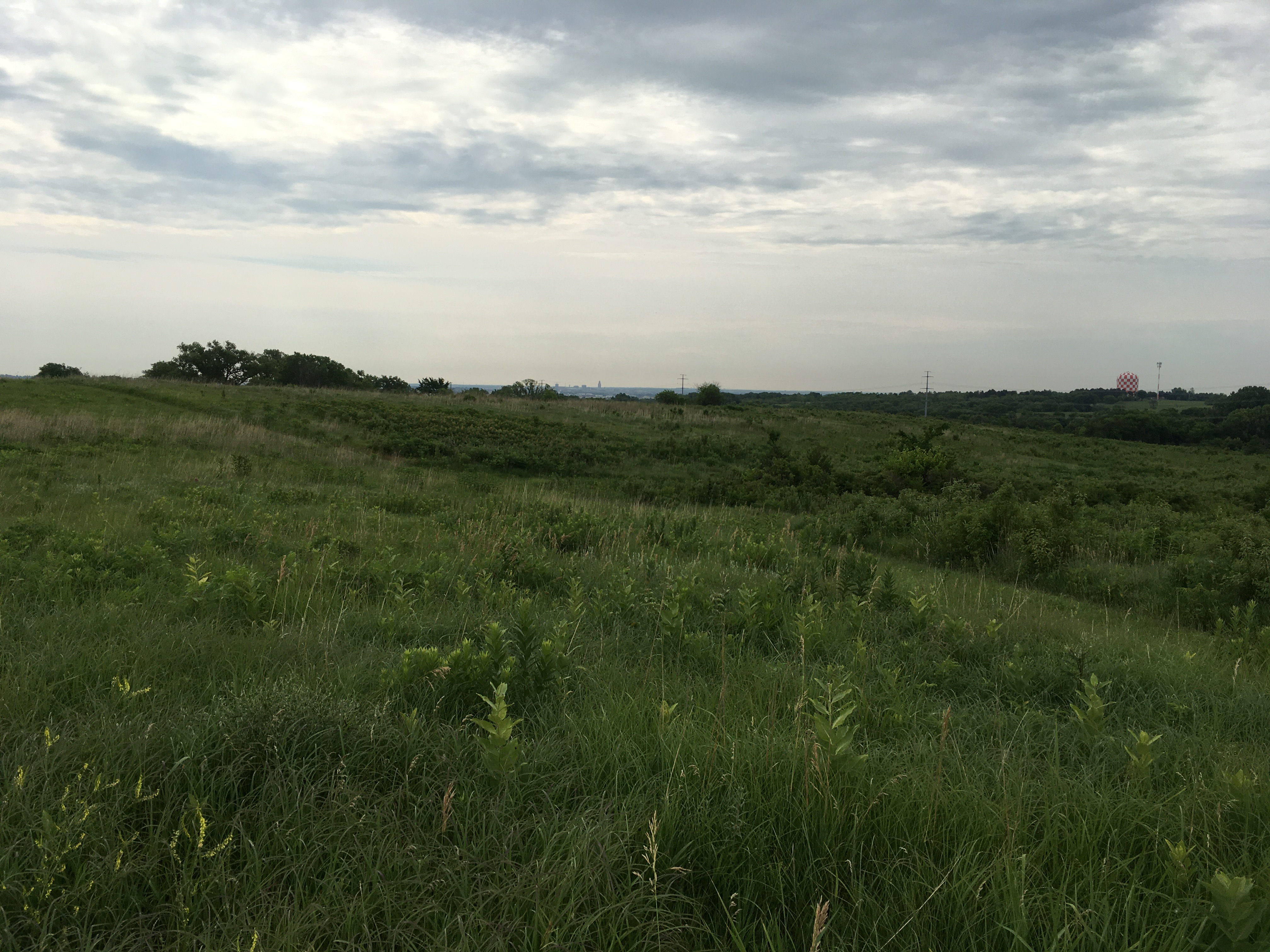
<p>All in all, it’s true and regrettable that the academic job market in the humanities is very bad. For that reason, my first advice to most students is that they should not go to graduate school if they can possibly find something else to do. But if there’s a benefit to that regrettable situation, it’s the opportunity it offers every student to make graduate school a path to love of place and community, rather than a path to anxious careerism. If you have ears to hear this call, then graduate school can be not just an option, but a blessing to you and to the life of your community.</p>]]></content><author><name></name></author><category term="academia" /><summary type="html"><![CDATA[There’s no shortage of such advice out there; consider this winsome and thoughtful post by Brad East, which puts the whole question in a properly theological key which I won’t try to better. However, the practical side of Brad’s post and some recent conversations with students have underlined for me that I offer different advice than most of my fellow professors do. I’m writing that advice out here in hopes that it will be of service to some, perhaps especially to those students who share with me a concern for values like place, community, and family—values to which graduate school has too often been hostile.]]></summary></entry><entry><title type="html">Nine Mile Prairie</title><link href="http://matt-miller.org/ninemileprairie/" rel="alternate" type="text/html" title="Nine Mile Prairie" /><published>2024-01-04T00:00:00+00:00</published><updated>2024-01-04T00:00:00+00:00</updated><id>http://matt-miller.org/nine-mile</id><content type="html" xml:base="http://matt-miller.org/ninemileprairie/"><![CDATA[<p><img src="https://github.com/matthewjmiller/mattmiller/blob/gh-pages/_assets/IMG_8543%202.JPG?raw=true" alt="Nine Mile Prairie" /></p>

<p>Nine Mile Prairie, Lincoln, Nebraska</p>]]></content><author><name></name></author><category term="images" /><summary type="html"><![CDATA[]]></summary></entry><entry><title type="html">Odysseus and the attempt to impose order</title><link href="http://matt-miller.org/nicolson-on-odysseus/" rel="alternate" type="text/html" title="Odysseus and the attempt to impose order" /><published>2022-07-05T00:00:00+00:00</published><updated>2022-07-05T00:00:00+00:00</updated><id>http://matt-miller.org/sissinghurst</id><content type="html" xml:base="http://matt-miller.org/nicolson-on-odysseus/"><![CDATA[<blockquote>
  <p>Odysseus thinks of [his return home] as a cleansing, a return to goodness, but the poem knows that the desire for sweetness has ended only in horror and mayhem. He thinks that order can be imposed by will; the poem knows that the vision of perfection brings war into a house and leaves it broken and bloodied.</p>

  <p>It is a sobering drama, an anti-Arcadia, with a deep lesson: singular visions do not work; only by consensus and accommodation can the good world be made; returning wanderers do not have all the answers; and anything which is to be done in your own Ithaca can only be done by understanding other people’s needs and their unfamiliar desires. Complexity, multiplicity, is all and clarified solutions come at a brutal price.</p>
</blockquote>

<p>Adam Nicolson, <em>Sissinghurst: An Unfinished History.</em> This book has a title that doesn’t mean much if you’re not a British gardening aficionado (Sissinghurst Castle is a famous garden created by Nicolson’s grandparents, the writers Harold Nicolson and Vita Sackville-West) and a truly awful cover, but it is an astonishing work of nonfiction prose. Nicolson weaves together literary history (his grandparents were adjacent to the Bloomsbury Group), family history, and the history of a place, going deep into geology, natural history, agricultural history, and more, including bits of literary insight like the passage above. And all that’s before the real story begins, of Nicolson’s attempt to change the land management practices at Sissinghurst, now owned by the big, creaky institution of the National Trust. It’s a remarkable book.</p>]]></content><author><name></name></author><category term="literature" /><summary type="html"><![CDATA[Odysseus thinks of [his return home] as a cleansing, a return to goodness, but the poem knows that the desire for sweetness has ended only in horror and mayhem. He thinks that order can be imposed by will; the poem knows that the vision of perfection brings war into a house and leaves it broken and bloodied. It is a sobering drama, an anti-Arcadia, with a deep lesson: singular visions do not work; only by consensus and accommodation can the good world be made; returning wanderers do not have all the answers; and anything which is to be done in your own Ithaca can only be done by understanding other people’s needs and their unfamiliar desires. Complexity, multiplicity, is all and clarified solutions come at a brutal price.]]></summary></entry><entry><title type="html">Reading diverse books is not about being nice</title><link href="http://matt-miller.org/treuer-indian-history/" rel="alternate" type="text/html" title="Reading diverse books is not about being nice" /><published>2022-06-20T00:00:00+00:00</published><updated>2022-06-20T00:00:00+00:00</updated><id>http://matt-miller.org/diverse-books</id><content type="html" xml:base="http://matt-miller.org/treuer-indian-history/"><![CDATA[<blockquote>
  <p>It has always bothered me that the very idea of paying attention to or knowing Indian history is tinged with the soft compassion of the do-gooder, as a kind of voluntary public service, like volunteering at an after-school program. But if we treat Indian stories this way, we do more than relegate Indians to history—as mattering only in relation to America’s deep and sometimes dark past. We also miss the full measure of the country itself. If you want to know America—if you want to see it for what it was and what it is—you need to look at Indian history and at the Indian present.</p>
</blockquote>

<p>David Treuer, <em>The Heartbeat of Wounded Knee.</em></p>

<p>The point Treuer makes here applies with equal force to reading any “diverse” literature and history. Don’t read diverse books because you “should” or because you’re “doing the work” or whatever moralistic justification you want to apply. Read them because they are part of the story of America and of the world—and not an unimportant or niche part either—and because they are great books.</p>]]></content><author><name></name></author><category term="education" /><summary type="html"><![CDATA[It has always bothered me that the very idea of paying attention to or knowing Indian history is tinged with the soft compassion of the do-gooder, as a kind of voluntary public service, like volunteering at an after-school program. But if we treat Indian stories this way, we do more than relegate Indians to history—as mattering only in relation to America’s deep and sometimes dark past. We also miss the full measure of the country itself. If you want to know America—if you want to see it for what it was and what it is—you need to look at Indian history and at the Indian present.]]></summary></entry><entry><title type="html">Magnanimous despair</title><link href="http://matt-miller.org/bilbro-jayber-crow-despair/" rel="alternate" type="text/html" title="Magnanimous despair" /><published>2022-06-20T00:00:00+00:00</published><updated>2022-06-20T00:00:00+00:00</updated><id>http://matt-miller.org/magnanimous-despair</id><content type="html" xml:base="http://matt-miller.org/bilbro-jayber-crow-despair/"><![CDATA[<blockquote>
  <p>The proper response to ideals we fail to attain—or indeed do not have the capacity to attain—is neither to lower the ideal nor to throw up our hands in bitter despair because we fail to reach the ideal. Rather, it is to allow our failure to become a kind of “severe mercy.” This phrase is from a letter that C.S. Lewis wrote to Sheldon Vanauken regarding the death of Vanauken’s beloved wife Davy. Perhaps, Lewis gently suggests, the loss of Davy might become “a mercy that was as severe as death, a death that was as merciful as love.” Losses and failures can become a mercy if they sharpen our longing for the glorious love we are created to participate in and embody. We weren’t created to be normies. We were created to be saints. And we ought to be dissatisfied with anything less. We will never be able to love our family members and neighbors as their eternal glory merits. But that failure attests to the incredible, not-yet-realized glory entrusted to us.</p>
</blockquote>

<p>Jeff Bilbro on <a href="https://www.frontporchrepublic.com/2022/05/severe-mercies-and-magnanimous-despair/">the ideals raised by work like Wendell Berry’s, and how <em>Jayber Crow</em> can help us cope with resulting despair</a></p>]]></content><author><name></name></author><category term="wisdom" /><summary type="html"><![CDATA[The proper response to ideals we fail to attain—or indeed do not have the capacity to attain—is neither to lower the ideal nor to throw up our hands in bitter despair because we fail to reach the ideal. Rather, it is to allow our failure to become a kind of “severe mercy.” This phrase is from a letter that C.S. Lewis wrote to Sheldon Vanauken regarding the death of Vanauken’s beloved wife Davy. Perhaps, Lewis gently suggests, the loss of Davy might become “a mercy that was as severe as death, a death that was as merciful as love.” Losses and failures can become a mercy if they sharpen our longing for the glorious love we are created to participate in and embody. We weren’t created to be normies. We were created to be saints. And we ought to be dissatisfied with anything less. We will never be able to love our family members and neighbors as their eternal glory merits. But that failure attests to the incredible, not-yet-realized glory entrusted to us.]]></summary></entry><entry><title type="html">Dad theory</title><link href="http://matt-miller.org/dad-theory/" rel="alternate" type="text/html" title="Dad theory" /><published>2022-06-18T00:00:00+00:00</published><updated>2022-06-18T00:00:00+00:00</updated><id>http://matt-miller.org/dad-theory</id><content type="html" xml:base="http://matt-miller.org/dad-theory/"><![CDATA[<blockquote>
  <p>Good thinking enables us to transform something we don’t know into something we do. To use a spatial metaphor, the challenge is to bring something in the distance a little closer to us without collapsing the distance completely. Performing the miracle of cogitation is likely to leave us feeling a little smug about ourselves, the self-ruling princes of the intellectual realm. But dads know such autonomy is illusory.</p>

  <p>My kids—if I can even use the possessive—are a part of me, but I cannot see them if I reduce them to my own reflection. Parenthood entails limitless closeness; all parents see more of their very young children than their kids can see of themselves. Being a dad, though, means perceiving this intimacy from a distance and working to make it outwardly manifest through awkward, conscious effort. This dialectical relationship resembles good thinking, which brings us to the first moment of Dad Theory. Dads guard against losing themselves in particularity, on one hand, and losing themselves in abstraction, on the other. Being a dad means being neither too attached to one’s own concerns to see things clearly, nor too impressed by speculation to see the messiness of real life. To practice Dad Theory is to negotiate with the known unknowns—and to trust that love is a stable point you can use to navigate through ambiguity to reach something solid and sure.</p>
</blockquote>

<p>Matt Dinan, <a href="https://www.thebulwark.com/its-time-for-some-dad-theory/">“It’s Time for Some Dad Theory”</a></p>]]></content><author><name></name></author><category term="parenthood" /><summary type="html"><![CDATA[Good thinking enables us to transform something we don’t know into something we do. To use a spatial metaphor, the challenge is to bring something in the distance a little closer to us without collapsing the distance completely. Performing the miracle of cogitation is likely to leave us feeling a little smug about ourselves, the self-ruling princes of the intellectual realm. But dads know such autonomy is illusory. My kids—if I can even use the possessive—are a part of me, but I cannot see them if I reduce them to my own reflection. Parenthood entails limitless closeness; all parents see more of their very young children than their kids can see of themselves. Being a dad, though, means perceiving this intimacy from a distance and working to make it outwardly manifest through awkward, conscious effort. This dialectical relationship resembles good thinking, which brings us to the first moment of Dad Theory. Dads guard against losing themselves in particularity, on one hand, and losing themselves in abstraction, on the other. Being a dad means being neither too attached to one’s own concerns to see things clearly, nor too impressed by speculation to see the messiness of real life. To practice Dad Theory is to negotiate with the known unknowns—and to trust that love is a stable point you can use to navigate through ambiguity to reach something solid and sure.]]></summary></entry><entry><title type="html">Ghosts of geography</title><link href="http://matt-miller.org/samaras-ghosts-of-geography/" rel="alternate" type="text/html" title="Ghosts of geography" /><published>2022-06-18T00:00:00+00:00</published><updated>2022-06-18T00:00:00+00:00</updated><id>http://matt-miller.org/ghosts-of-geography</id><content type="html" xml:base="http://matt-miller.org/samaras-ghosts-of-geography/"><![CDATA[<blockquote>
  <p>What would you give</p>

  <p>to have heaven be the way you imagine,   <br />
made of the familiar and welcoming?</p>
</blockquote>

<p><a href="https://imagejournal.org/article/beloved-ghosts-of-geography/">Nicholas Samaras, “Blessed Ghosts of Geography”</a></p>]]></content><author><name></name></author><category term="poetry" /><summary type="html"><![CDATA[What would you give to have heaven be the way you imagine, made of the familiar and welcoming?]]></summary></entry></feed>